News
Thermoforming Vs Pressure Forming Vs Vacuum Forming
September 14, 2026
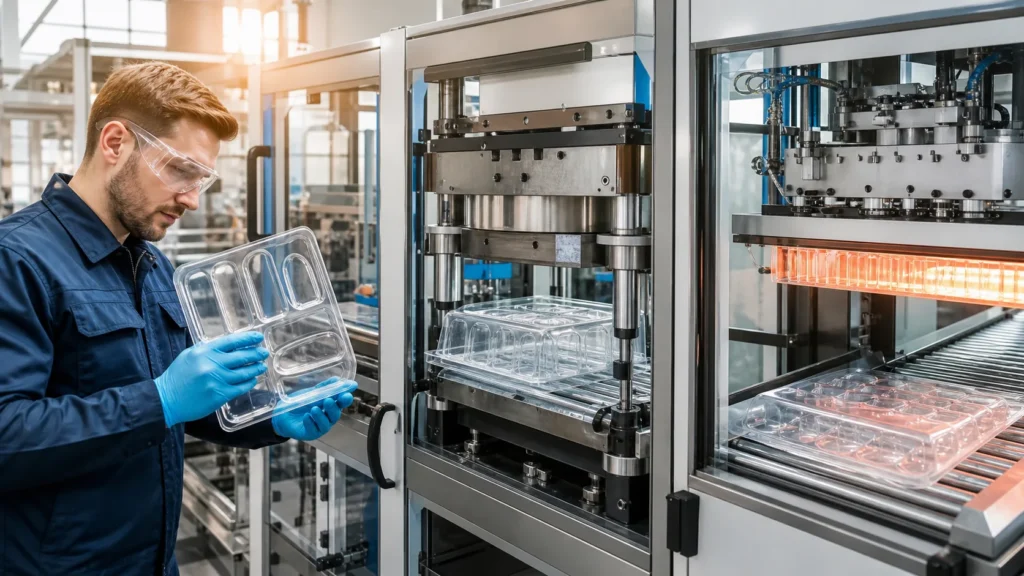

Choose the Right Forming Process Before Production
Choosing between thermoforming, vacuum forming and pressure forming can shape how your product looks, fits, travels and stands out on the shelf. We help Australian businesses weigh these options when developing custom plastic packaging for new products, expanding ranges and promotional releases.
All three methods heat plastic sheet until it becomes pliable, then form it against a mould. The difference is how the sheet is pulled or pushed into shape. That affects the level of detail, the look of the finished pack, the tooling approach and how well the packaging suits your product. A practical hardware tray will need something different from a detailed cosmetics insert or pharmaceutical blister pack.
Spring is also a useful time to plan ahead for Christmas retail, confectionery promotions, summer products and end-of-year launches. When we are involved early, there is more room to refine the pack design, select suitable materials and prepare tooling before production is needed.
Thermoforming Sets the Foundation for Every Format
Thermoforming is the broad name for forming heated plastic sheet over or into a mould. Vacuum forming and pressure forming are both types of thermoforming, rather than entirely separate processes. This gives you a flexible starting point when considering the right packaging style for your product.
Through our thermoforming services, we can produce packaging designed to hold, protect, separate and display a wide range of goods. The final result depends on the mould design, plastic material, wall thickness and the demands of the product itself.
Common thermoformed packaging formats include:
- Blister packs for clear product display
- Clamshells for enclosed retail presentation
- Trays for organising and protecting products
- Plastic box inserts that keep items in position
- Protective packaging for consumer goods
Different industries call for different outcomes. Food and confectionery products may need orderly trays, while hardware packaging may need to keep components separated. Cosmetics and consumer goods often need clear visibility and a neat presentation. For pharmaceutical packaging, fit and consistency may be central considerations.
We recommend treating thermoforming as the overall packaging family, then choosing the forming method that best suits the level of detail, shape and presentation your pack needs.
Vacuum Forming Delivers Value for Practical Designs
Vacuum forming begins with a heated plastic sheet placed over a mould. Air is removed from between the sheet and mould, drawing the plastic closely around the mould shape. It is a practical method for packaging with broad surfaces, gentle curves and uncomplicated geometry.
This process is often well suited to packs where the main job is to organise, cushion or show the product clearly. A tray inside a box, a basic clamshell or a protective insert does not always need fine textures or sharply defined decorative features to do its job well.
We commonly see vacuum forming suit applications such as:
- Product trays and box inserts
- Protective packaging for consumer goods
- Basic clamshell packaging
- Hardware packs that separate parts
- Food and confectionery trays
The trade-off is detail. Fine lines, sharp internal corners, deep draw areas and highly textured surfaces can be harder to reproduce through vacuum alone. Material also stretches as it forms, so the shape and depth of the mould need careful thought.
If your priority is a functional pack with a straightforward shape, vacuum forming can be a sensible direction. During early discussions, we assess whether the product needs simple support and visibility, or whether it needs the crisp surface definition that another method can provide.
Pressure Forming Brings Fine Detail Into Focus
Pressure forming also uses heated plastic sheet and a mould, but compressed air pushes the plastic firmly against the mould surface. That additional force allows the material to pick up more intricate features than vacuum forming alone.
For packaging that is part of the product experience, this added detail can make a noticeable difference. Pressure forming can reproduce sharper edges, textures, logos and other fine mould features with a more defined finish.
We may recommend pressure forming when your packaging needs:
- Detailed cosmetic inserts
- Premium retail presentation
- Branded product displays
- Textured surfaces or crisp lines
- More complex protective shapes
This method can be especially useful for high-visibility consumer goods where the packaging supports shelf appeal and perceived product quality. A clear pack is not only there to contain an item, it may also be the first part of the product a customer sees.
Because pressure forming involves more specialised process control and mould detail, it needs careful planning before production. We look at the depth of the pack, the features you want to replicate, the material selected and how the finished packaging will be handled. That helps us determine whether the desired finish is realistic and repeatable.
Compare Production Fit and Quality
Neither vacuum forming nor pressure forming is automatically the better choice. Thermoforming is the wider process category. Vacuum forming generally suits simpler, practical forms, while pressure forming is better suited to packs where detailed presentation is important.
When comparing thermoforming services, we encourage you to look beyond appearance. Packaging needs to work from the moment it is formed through to transport, retail display and customer use. A pack that looks polished but does not support the product properly may not be the right solution.
Questions we consider with you include:
- Does the product need cushioning, separation or a precise fit?
- Will the pack be stacked, boxed or transported over long distances?
- Is tamper evidence needed for the intended retail environment?
- Does the design require deep draws, sharp corners or fine textures?
- How important are shelf presentation and easy product access?
Tooling complexity, pack dimensions, material choice, design features, expected production volume and any secondary operations all affect the production approach. Established product lines and recurring seasonal ranges can also benefit from planning that considers future repeat runs, not only the first release.
Bringing us into the design stage helps identify possible forming issues before tooling is finalised. We can review material distribution, mould features and the practical demands of the finished pack, then guide the design towards an outcome that can be formed consistently.
Turn Your Concept Into a Production-Ready Pack
For uncomplicated packaging that needs to protect, organise or display a product, vacuum forming is often a strong fit. When crisp detail, textured features and a more premium retail finish matter, pressure forming may be the better option. Thermoforming provides the flexible foundation that makes both approaches possible.
The best decision comes from matching the process to your commercial goals, product requirements and retail setting. Planning early for spring launches, Christmas demand or future product ranges gives you more time to refine the design and select a forming method that suits the finished pack, not just the initial concept.
Packaging Support That Fits Your Product
Clear-Pak can help you assess material, design and production requirements before moving into manufacture. Our thermoforming services provide practical packaging options for products that need reliable presentation and protection. To discuss your next packaging project, contact us for tailored advice.